



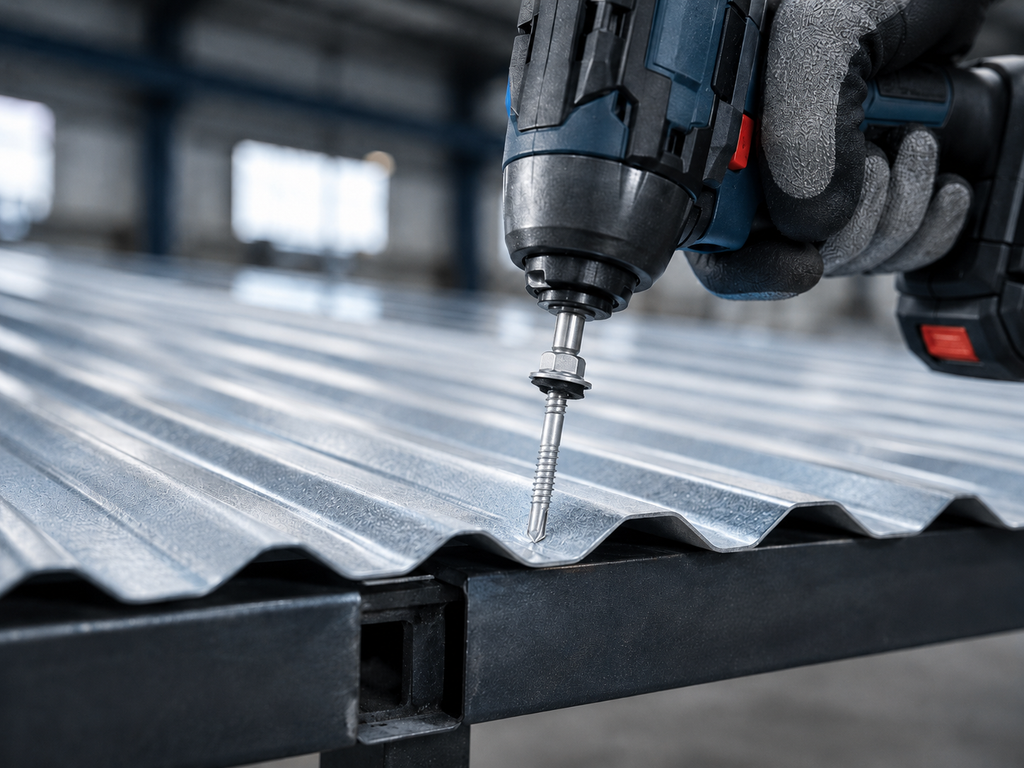
For roof installation using metal sheets, the efficiency of the system is dependent on the quality of the screws and the installation tools. The screws hold the metal sheets together and provide structural support, while proper installation ensures a seal, secure fastening, and long-lasting performance.
The hex head socket is among the most important tools for the task. The tool is designed to mount on a drill or impact driver and then hold the six-pointed end of the screw. Using the hex head socket, fixers get better control and installation pressure compared to a common screwdriver. Most roofs have many screws; hence the need for the proper socket.
What is a Hex Head Socket?
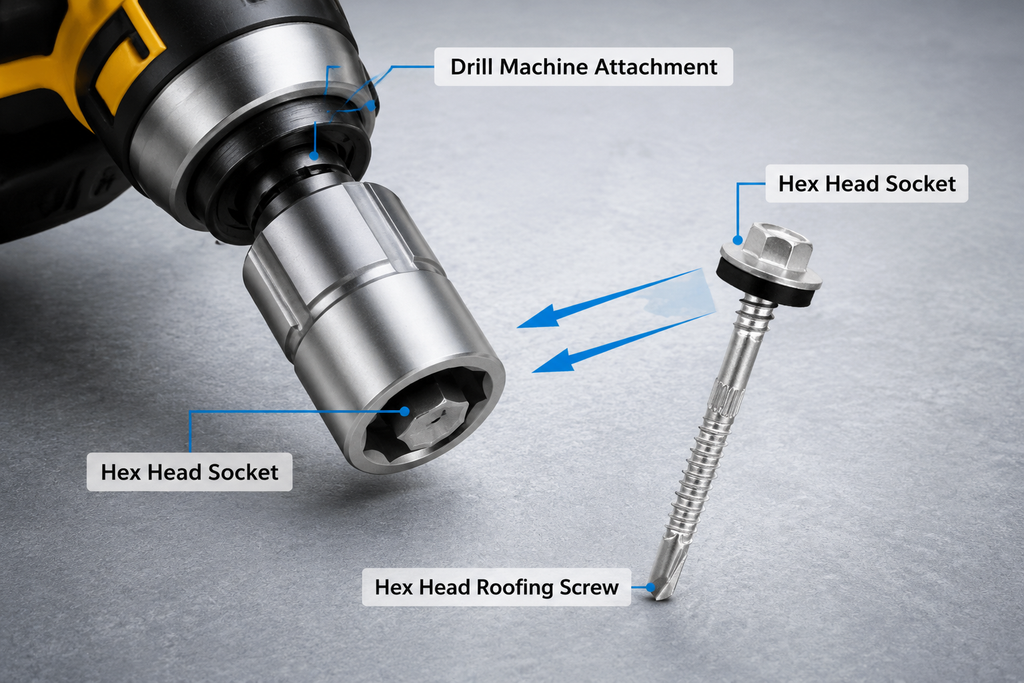
Hex head sockets are drill bits made to fit screws with a hexagonal head. Rather than fitting over the end of the screw, this bit covers the six sides of the head and fits around it firmly. The effect of this is that torque can be applied evenly to the screw.
In roofing operations, the sockets are utilized daily for driving hex head roofing screws into metal sheeting, steel purlins, and other supporting structures. The socket snaps into the drill and locks in place to secure the screw head, preventing slipping and damage to the screw. These sockets are also referred to as nut driver sockets. They are designed to fit precisely the screw head to ensure smooth power transfer. This is particularly important when working with a number of screws at high speed.
Why Roofing Screws Use Hex Head Design
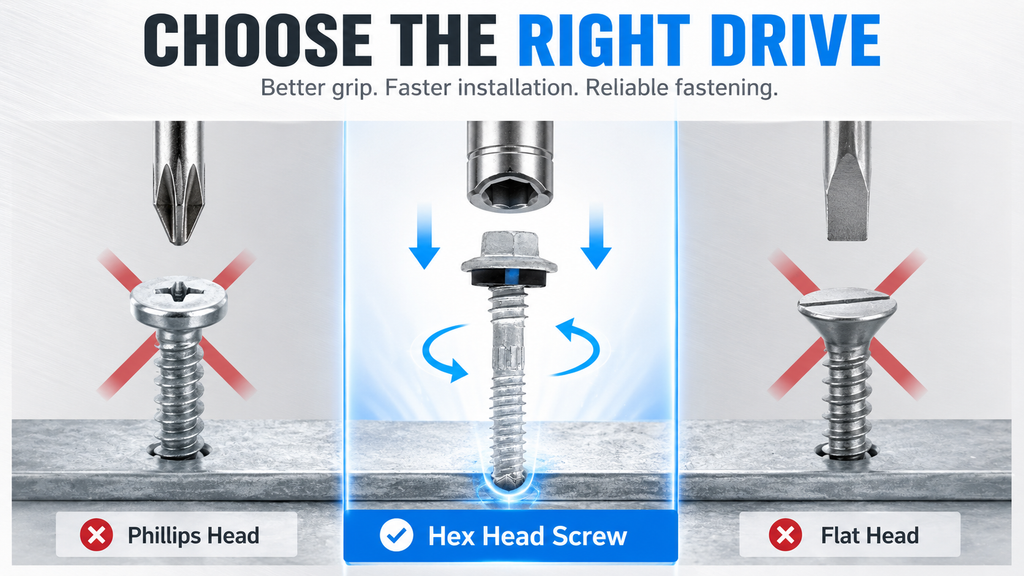
Roofing screws need a strong, reliable hold between the sheet and the structure. The hexagonal head is chosen for that reason. It lets installers put higher torque on the screw with better control than flat or Phillips heads. This matters a lot when the screw has to go through a metal sheet and sometimes into steel while still compressing the washer correctly.
The hex shape and the matching socket work together to create a stable driving connection that reduces slipping.
Key advantages include:
• Stronger grip for the driving tool
The socket fully surrounds the head and stays locked on.
• Better torque transfer
You can apply more force without rounding the head.
• Reduced slippage during installation
The screw stays aligned as it goes in.
• Faster installation on large roofing projects
Hundreds of screws can be driven more efficiently.
• Improved control over washer compression
Pressure stays even so the seal forms properly.
Because of these benefits, hex head screws are common on metal roofs, cladding, and industrial jobs where both speed and long-term hold are important.
How a Hex Head Socket Helps in Roofing Screw Installation
Installing roofing screws needs both speed and accuracy, especially on bigger projects. A hex head socket gives better control and helps the screw do its job properly. Because the socket fully surrounds the head, power transfers more cleanly, and the screw stays steady.
Here are the main ways it improves the work:
1. Better Grip During Installation
The biggest advantage is the secure hold on the screw head. Unlike flat or cross-head bits, the socket fits tightly around the hex and cuts down movement while the drill turns.
Benefits include:
• better alignment of the screw while drilling
• less chance of the tool slipping
• less damage to the screw head
This firm grip helps keep fastening consistent across many screws.
2. Faster Installation on Roofing Projects
Most roofing crews work against the clock, especially on industrial or commercial jobs. A hex head socket speeds things up because:
• the screw stays lined up with the drill
• you can drive it smoothly without constantly repositioning
• less time is spent fixing misaligned fasteners
The result is faster work without losing quality.
3. Consistent Washer Compression
Most roofing screws carry an EPDM washer that seals the hole and keeps water out. A hex head socket lets you apply controlled pressure so the washer flattens evenly against the sheet.
Correct compression gives:
• reliable waterproof sealing
• uniform fastening across the roof
• lower risk of leaks at the fixing points
4. Reduced Risk of Screw Head Damage
Using the wrong tool often damages the head. A properly fitted hex socket spreads the force evenly around all six sides.
This helps avoid:
• stripped screw heads
• stops in the middle of the job
• difficulty removing or replacing the screw later
Quick Comparison: Installation With and Without a Hex Head Socket
| Installation Factor | With Hex Head Socket | Without Proper Socket |
| Tool Grip | Firm and stable | Higher risk of slipping |
| Installation Speed | Faster and smoother | Slower due to adjustments |
| Washer Compression | More controlled | Uneven pressure possible |
| Screw Head Condition | Minimal damage | Risk of stripping |
| Installation Consistency | High | Inconsistent results |
Overall, a hex head socket helps crews get more reliable and consistent results, especially when large numbers of screws are involved.
Common Sizes of Hex Head Sockets Used for Roofing Screws
Hex head sockets come in different sizes to match different screw heads. On roofing jobs, the correct size is important so the socket fits tightly. Too large, and it slips. Too small, and it won’t fit. The right size gives better control, faster work, and more consistent fastening.
For most metal roofing screws used on industrial and commercial projects, a couple of sizes are common.
Common Hex Head Socket Sizes for Roofing Screws
| Socket Size | Typical Screw Head Size | Common Roofing Applications |
| 5/16 inch | Standard roofing screw heads | Metal roofing sheets, cladding installation |
| 3/8 inch | Larger structural screws | Heavy-duty roofing and steel connections |
Note: 5/16 inch and 3/8 inch are common socket sizes used for roofing screws, but they are not universal sizes. The socket must always match the actual screw head size to ensure a proper fit and secure driving.
Why Choosing the Correct Socket Size Matters
Using the right size keeps installation smooth and reliable.
Key advantages include:
• Proper grip on the screw head – the socket fits tightly and does not slip.
• Improved torque transfer – the drill power goes efficiently into the screw.
• Reduced damage to screw heads – correct sizing stops rounding or stripping.
• More consistent installation results – fastening stays uniform across many screws.
Most crews keep 5/16 inch sockets ready because they suit standard roofing screws. Always check the screw head size before starting. Matching the screw and socket correctly helps the fixing points stay secure over time.
Magnetic Hex Head Sockets: Why Installers Prefer Them
Magnetic hex head sockets are popular because they make the job easier, faster, and more controlled. A small magnet inside the tip holds the screw in place before and during driving.
This is especially useful on roofs where you are positioning screws while holding a power tool. The magnet keeps the screw aligned and stops it from falling or shifting. On big jobs, even small time savings add up across hundreds of fasteners.
Advantages of Magnetic Hex Head Sockets
• Holds the screw securely before drilling – the magnet keeps it attached so positioning is easier.
• Reduces dropped screws during installation – helpful when working at height.
• Improves installation speed – you can place and drive screws without holding each one by hand.
• Better control during screw alignment – the screw stays centered as the drill starts.
• Convenient for large roofing projects – keeps the workflow moving when fixing large numbers of screws.
Standard vs Magnetic Hex Head Sockets
| Feature | Standard Hex Socket | Magnetic Hex Socket |
| Screw Holding | Screw must be held manually | Magnet holds screw in place |
| Ease of Alignment | Moderate | Easier alignment |
| Installation Speed | Normal | Faster installation |
| Risk of Dropping Screws | Higher | Lower |
Because of these benefits, magnetic sockets are widely used on metal roofing sheets, cladding, and industrial fasteners. They improve both speed and accuracy on large surfaces.
Tips for Using Hex Head Sockets for Roofing Screw Installation
Using the socket correctly helps screws seat securely and perform as expected. The tool is simple, but a few practical habits improve accuracy and reduce common problems.
Roofing crews work across large areas in different conditions. Good tool handling keeps fastening quality consistent across the whole roof.
Best Practices for Using Hex Head Sockets
• Choose the correct socket size – always match it to the screw head for a firm grip and no slippage.
• Maintain a straight drilling angle – hold the drill perpendicular to the sheet so the screw enters evenly and the washer compresses properly.
• Avoid overtightening the screw – too much torque can crush the washer and weaken the seal. Compress it evenly without deforming it.
• Inspect the socket regularly – wear or dirt can affect the fit. A worn socket can cause slipping and poor torque transfer. Check the socket regularly and replace it when the fit becomes loose.
• Use magnetic sockets for easier handling – they hold the screw in place, especially useful at height or on large roofs.
• Use the recommended driving speed – the appropriate RPM depends on the screw size, material being fastened, and the screw manufacturer’s recommendation. Always follow the recommended driving speed for the specific screw and application.
• Use impact drivers carefully – excessive torque or impact can damage the screw head or over-compress the EPDM washer. Use the appropriate setting and avoid excessive impact during installation.
Quick Installation Checklist
| Installation Step | What to Check |
| Socket Selection | Confirm correct socket size for the screw |
| Drill Position | Keep the drill straight during installation |
| Washer Compression | Ensure the washer is compressed but not crushed |
| Tool Condition | Inspect socket for wear or damage |
| Screw Alignment | Make sure the screw enters the sheet correctly |
These simple steps help achieve consistent fastening, fewer errors, and proper sealing at every screw location.
Conclusion
When it comes to metal roofing, you need to consider fastener systems that include not only the screws but also the equipment used for installation. BDN Fasteners India Pvt. Ltd. is one of those companies that offers reliable fastener solutions for efficient, reliable roof installation.
The importance of a hex head socket cannot be overstated because it ensures reliable gripping, alignment, and torque control during installation.
Because it matches the hex head, installation is efficient, and washer pressure stays consistent throughout the process. This helps ensure the screw is not damaged and that the fixing point seals reliably.
When installing a large number of screws, such as hundreds or even thousands, focus on the right socket choice and installation techniques.
Choose the Right Roofing Fastening Solution
Contact BDN Fasteners India Pvt. Ltd. today for reliable roofing screws and fastening solutions designed for secure, efficient, and consistent installation.